The ADKAR Change Management Model helps leaders guide teams through change in a structured and predictable way. The model breaks transformation into five actionable stages:
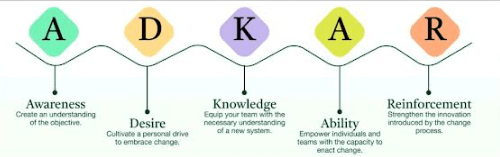
Awareness, Desire, Knowledge, Ability, and Reinforcement. Together, these steps provide a roadmap that ensures individuals not only understand and accept change but are equipped and motivated to sustain it long-term.
1. Awareness: Creating understanding of the need for change
Every successful change initiative begins with awareness. Employees must first understand why change is necessary. Without this foundation, even the most well-crafted strategy can fail due to uncertainty, confusion, or resistance.
Awareness involves communicating the business drivers behind the change. Leaders should clearly explain what problem the change solves, what opportunities it creates, and what risks come with doing nothing. Transparency is essential here: employees respond positively when they feel respected and informed rather than blindsided.
Effective strategies for building awareness include formal announcements, team discussions, Q&A sessions, and data presentations that outline the urgency of the situation. Feedback loops also matter—leaders should encourage employees to ask questions and voice concerns. This two-way communication ensures people understand the change objective and sets the stage for trust and engagement.
2. Desire: Cultivating personal motivation for change
Once employees understand the need for change, the next challenge is fostering their internal motivation to support and participate in it. Awareness is about logic; desire is about emotion.
Desire is influenced by organizational culture, individual incentives, personal experiences, and the perceived benefits or drawbacks of the change. Leaders play a crucial role in this stage by connecting the change to employees’ values and professional goals. It’s not enough to tell people what will happen—they need to believe that change is worthwhile.
Practical ways to build desire include involving employees early in discussions, demonstrating empathy toward concerns, highlighting champions who support the initiative, and offering clarity about how the change benefits both the organization and the individual. Recognition, open dialogue, and showcasing success stories can also strengthen buy-in.
3. Knowledge: Equipping teams with the tools and skills they need
Once employees want the change, they need to know how to make it happen. The knowledge stage focuses on providing the training, resources, and information essential for implementing the change successfully.
Knowledge may include technical training, new process documentation, role-specific instructions, or guidelines for using new tools. Importantly, this stage must be tailored—different teams or individuals may require different types or levels of training.
Key components of effective knowledge building include structured learning programs, hands-on practice, job aids, and ongoing educational support. Leaders must ensure employees not only receive the information but also have opportunities to absorb and apply it. A common mistake is assuming that one presentation or training session is sufficient; in reality, learning requires repetition, reinforcement, and practical application.
4. Ability: Turning knowledge into action
Knowledge alone does not guarantee performance. The ability stage focuses on applying what was learned in a real-world context. This is where employees begin executing new tasks, behaviors, and processes.
Developing ability requires time, coaching, and practice. Employees may encounter unexpected challenges or require additional support as they adapt. Leaders should step in with targeted assistance, constructive feedback, and opportunities to refine skills.
Common actions that build ability include one-on-one coaching, mentorship, supervised practice sessions, pilot programs, and phased rollouts that allow teams to adjust gradually. Leaders must remain patient and understanding—mastery takes time, and early setbacks are normal.
5. Reinforcement: Ensuring the change sticks
The final step of ADKAR, reinforcement, ensures that the change becomes part of the organization’s culture and daily operations. Without reinforcement, employees may revert to old habits, especially if new processes feel unfamiliar or uncomfortable.
Reinforcement can take many forms: recognition and rewards, performance metrics, continued communication, and ongoing evaluation of adoption levels. Positive reinforcement helps solidify behaviors, while corrective measures address lapses promptly but constructively.
Regular check-ins, feedback loops, and refresh training sessions support long-term sustainability. Leaders must also monitor the organization’s environment—if pressures or priorities shift, reinforcement strategies may need adjustment. The goal is not just short-term adoption but long-term integration.
Visualizing ADKAR over time
The ADKAR stages naturally unfold over time. Awareness emerges early, followed by the building of desire and knowledge. As the change progresses, emphasis shifts to ability, where employees begin executing new practices, and later to reinforcement, where the changes are solidified.
This timeline perspective is valuable because it highlights the sequential nature of change. Skipping steps or rushing through early stages often leads to problems later. For example, if knowledge is provided before employees have desire, training can feel irrelevant or burdensome. Conversely, reinforcement must come last—celebrating change too early can weaken long-term adoption.
Implementing ADKAR
I believe there are three essential best practices for leaders adopting the ADKAR model:
1. Lead from the Front
Change must start at the top. When leaders demonstrate commitment, transparency, and consistency, employees are more likely to trust the process and follow through. Leadership behavior sets the tone for the entire organization.
2. Make Progress Visible
Visibility fuels motivation. Sharing milestones, metrics, and successes helps employees understand the impact of their efforts. Progress dashboards, regular updates, and public recognition ensure momentum stays strong.
3. Reward Behaviors, Not Outcomes
Rewarding only end results can unintentionally discourage people during long transformations. Instead, recognize behaviors that support change—engagement, experimentation, collaboration, learning, and adaptability. Reinforcing these behaviors creates a culture where change is not just accepted but embraced.
Why ADKAR works?
ADKAR’s strength lies in its simplicity and human-centered focus. Rather than viewing change as a technical or logistical challenge, it addresses the emotional and psychological aspects that influence individual behavior. This makes the model applicable across industries, projects, and organizational sizes.
By guiding leaders through a structured progression—awareness, desire, knowledge, ability, and reinforcement—ADKAR ensures teams understand change, support it, know how to implement it, feel confident executing it, and maintain it over time. In doing so, it empowers organizations to navigate complexity with clarity and confidence.
 DREIESKIVA|Roald Kvam
Legg igjen en kommentar