In today’s hyper-competitive markets, winning a customer once is no longer enough. The real challenge lies in keeping them — fostering trust, connection, and repeat engagement. This is where the Customer Loyalty Business Model comes in. By going beyond core products and services to offer incentives, rewards, and personalized value, businesses can create deeper relationships that not only retain customers but also drive growth.
Let’s explore…
What is the Customer Loyalty Business Model?
At its core, the Customer Loyalty business model is a strategic approach focused on retaining customers and encouraging repeat business through added value.
Instead of competing solely on price or product features, companies use loyalty programs — offering points, discounts, exclusive access, or tailored experiences — to strengthen the emotional and practical ties customers have with the brand.
This model aims to:
- Build long-term customer relationships.
- Reduce the risk of churn.
- Differentiate the brand in crowded markets.
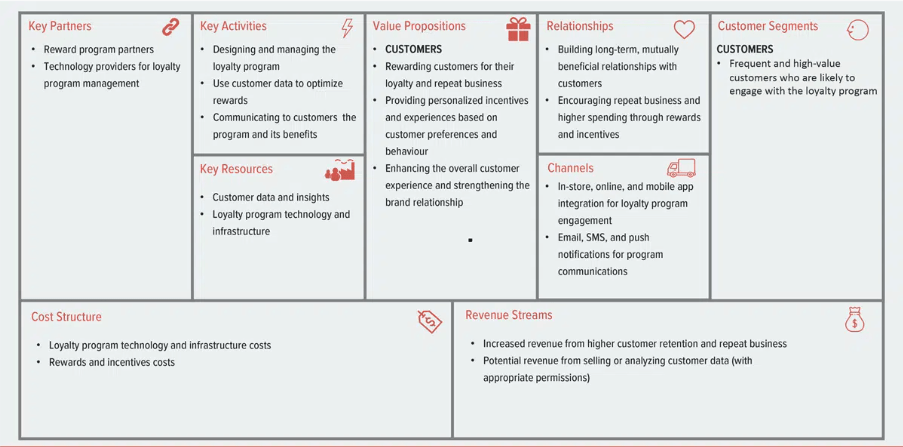
Why is it important?
The value of loyal customers cannot be overstated. They buy more often, spend more per transaction, and advocate for your brand. A well-executed loyalty program creates benefits across multiple dimensions:
- Increased retention
Incentives encourage customers to return, reducing churn and extending customer lifetime value. - Stronger brand loyalty
Customers feel a sense of belonging, making them less likely to switch to competitors. - Valuable customer data
Tracking engagement provides insights into customer behavior, enabling personalization and more effective marketing. - Higher revenue
Loyal customers spend more, both in frequency and transaction size. - Competitive advantage
In industries where offerings are similar, loyalty programs create a clear differentiator.
How to implement the model
Launching a successful customer loyalty program requires planning, execution, and ongoing refinement. Key steps include:
- Define clear objectives
Decide whether your primary goal is retention, increased spend, or better customer insights. - Identify meaningful rewards
Offer rewards that truly resonate with your target audience, whether discounts, exclusive products, or experiences. - Design program mechanics
Create clear rules for earning and redeeming rewards. Consider tiers or milestones to encourage higher engagement. - Leverage technology
Use CRM systems, data analytics, and mobile-friendly platforms to ensure seamless customer experiences. - Communicate and promote
Market your program effectively across channels, ensuring customers understand the value and how to participate. - Monitor and optimize
Continuously analyze performance, gather feedback, and adapt rewards or mechanics to keep the program relevant.
The Customer Loyalty Business Model is more than just points and perks. It is about creating enduring relationships with customers, powered by value, trust, and meaningful engagement.
By rewarding loyalty, businesses not only protect their revenue streams but also build a base of advocates who sustain long-term success. In a world where customer choice is nearly limitless, loyalty is the bridge that keeps them coming back.
 DREIESKIVA|Roald Kvam
Legg igjen en kommentar