Stakeholder mapping and lobbying are powerful strategies that organizations, individuals, and advocacy groups use to influence decisions, policies, or public opinion.
Stakeholder mapping is a process of identifying and analyzing the key people and groups that have an interest in or influence over a particular issue or objective. This structured approach allows organizations to understand who their allies and opponents might be, what motivates these stakeholders, and how best to communicate with them.
Practical lobbying builds on this foundation, providing the strategic activities that allow organizations to advance their goals by influencing key stakeholders directly.
Stakeholder mapping
Stakeholder mapping is essential for any project or policy initiative as it provides insights into the landscape of influence and potential support or opposition. This step-by-step process includes identifying relevant stakeholders, categorizing their influence and interest levels, and determining appropriate strategies for engaging each group.
Identifying stakeholders
The first step is to list all individuals, groups, or organizations with an interest in or impact on the issue at hand. These might include government officials, industry leaders, community groups, the media, competitors, and even the general public. Broad thinking is essential here, as missing any key stakeholders can lead to gaps in your strategy.
Categorizing stakeholders by influence and interest
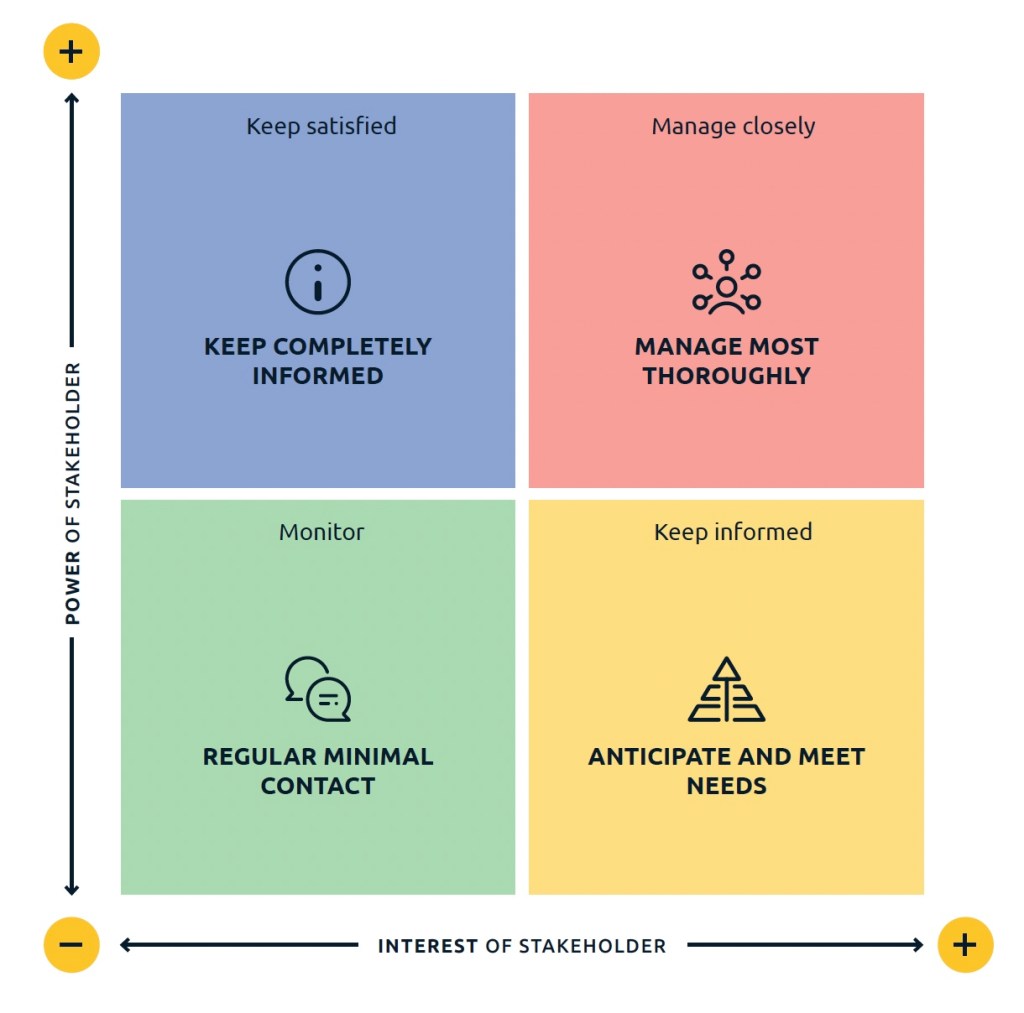
Once stakeholders are identified, they can be categorized by their level of influence – or power – (ability to impact the outcome) and level of interest (the degree to which they care about the issue). Typically, stakeholders are placed in one of four quadrants:
- High Influence, High Interest: These are priority stakeholders who should be engaged closely and consistently.
- Low Influence, High Interest: Often community groups or smaller organizations, these stakeholders care deeply but lack direct influence. They can, however, be mobilized as advocates.
- High Influence, Low Interest: While these stakeholders may not be actively engaged, they hold significant power and should be kept informed.
- Low Influence, Low Interest: These stakeholders need minimal engagement, but it may be useful to keep them informed periodically.
Mapping relationships and networks
Understanding relationships among stakeholders can reveal informal networks and indirect influence channels. Social network analysis or tools like relationship mapping software can help visualize connections, revealing who influences whom and identifying potential intermediaries who can help reach influential stakeholders indirectly.
Determining engagement strategy
For each category of stakeholder, a tailored engagement strategy is necessary. For example, high-influence, high-interest stakeholders may require regular updates, personalized outreach, or direct meetings, while low-influence, high-interest groups might benefit from public events, social media outreach, or involvement in campaigns that give them a voice.
Practical lobbying
Once stakeholders are mapped and categorized, the next step is practical lobbying – strategically engaging stakeholders to support your objectives. Lobbying is particularly common in sectors such as government relations, policy advocacy, corporate social responsibility, and non-profit activism.
Building personal relationships
At the core of effective lobbying is the ability to build trust and rapport. Establishing personal relationships with key stakeholders can make a significant difference, especially with high-influence individuals who may hold decision-making power. Regular, personalized communication – through emails, phone calls, or face-to-face meetings – helps build these relationships over time.
Aligning messages with stakeholders’ interests
Crafting messages that resonate with each stakeholder’s interests, values, and needs increases the likelihood of gaining their support. For example, if you are lobbying for environmental regulations, corporate leaders might respond more favorably to messages highlighting the economic benefits of sustainable practices, while community groups might care more about health and quality of life.
Utilizing data and evidence
Presenting clear, evidence-based information is vital in lobbying, especially when dealing with high-influence stakeholders who may require solid data before supporting a cause. Research studies, case studies, or expert opinions provide credibility, reinforcing your arguments and helping stakeholders make informed decisions.
Creating calitions and alliances
Collaborative lobbying amplifies influence, as groups that join forces can pool resources, broaden their reach, and present a united front. Forming coalitions with like-minded organizations, community leaders, or industry groups can strengthen your lobbying efforts, making it more likely that key decision-makers will take notice.
Engaging through multiple channels
Lobbying should be a multi-channel effort that combines direct and indirect forms of communication. In-person meetings, phone calls, and official reports can be supplemented by digital advocacy on social media, email newsletters, or public relations campaigns to increase visibility and impact. Digital platforms also allow lobbying efforts to reach a wider audience, mobilizing support among lower-influence, high-interest groups that can build momentum for change.
Maintaining transparency and accountability
Trust is essential in lobbying, and maintaining transparency helps build credibility. Be open about your objectives, align your lobbying activities with ethical standards, and demonstrate accountability. This approach not only strengthens relationships with stakeholders but also protects against reputational risks associated with lobbying efforts.
Challenges and ethical considerations in lobbying
While stakeholder mapping and lobbying are powerful tools, they come with ethical considerations. Lobbying should be conducted transparently, ensuring that all interactions are legal, ethical, and respectful of each stakeholder’s interests. Manipulative or coercive lobbying undermines trust and can lead to reputational damage. Furthermore, organizations should remain vigilant to avoid creating echo chambers within their coalitions, as engaging with opposing viewpoints can often yield better, more balanced outcomes.
Integrating stakeholder mapping and lobbying for maximum impact
Stakeholder mapping and practical lobbying are essential tools for any organization or individual aiming to drive change. By understanding who your key stakeholders are, what they care about, and how best to reach them, you lay the groundwork for a targeted and effective lobbying strategy. When combined, these techniques create a powerful influence network, allowing you to build alliances, tailor your messages, and gain the support needed to make a meaningful impact.
By approaching stakeholder mapping and lobbying strategically – and ethically – you can navigate complex networks of influence and drive meaningful change on issues that matter.
 DREIESKIVA|Roald Kvam
Legg igjen en kommentar