The «Playing to Win» strategy, introduced by A.G. Lafley and Roger L. Martin in their groundbreaking book Playing to Win: How Strategy Really Works, flips the traditional approach to business strategy on its head. Instead of simply surviving or coasting along in a competitive landscape, this strategy pushes companies to actively position themselves to win — by making sharp, intentional decisions that set them apart and drive lasting success. The strategy is designed not just to maintain relevance but to create a sustainable, distinctive competitive advantage that allows companies to dominate over time.
The Five Strategic Choices
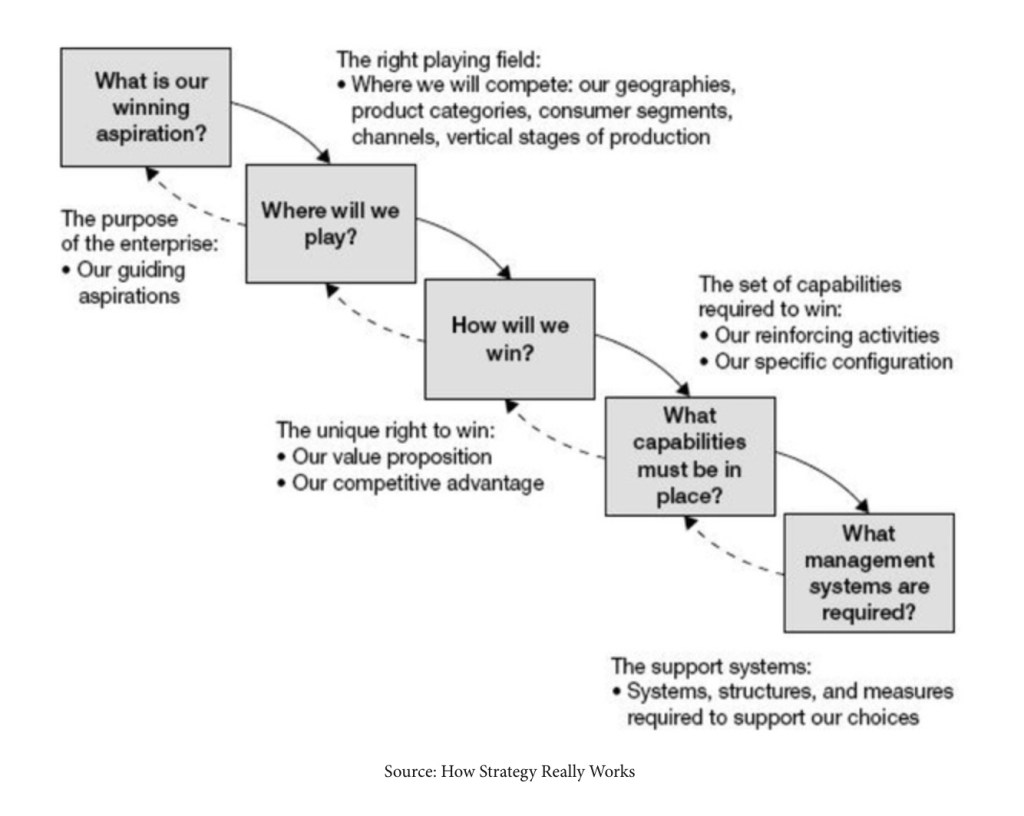
At the core of the Playing to Win framework are five powerful, interlocking questions. These aren’t just abstract notions; they are actionable decisions every business needs to make if they want to build a strategy that actually works.
- What is our winning aspiration?
- Where will we play?
- How will we win?
- What capabilities must be in place?
- What management systems are required?
Let’s dive into these questions and explore how they can be used to shape an unbreakable strategy.
1. What Is Our Winning Aspiration?
This is where the magic begins. The first step in the Playing to Win strategy is to define what «winning» looks like. Winning isn’t just about surviving; it’s about thriving and standing out in a crowded market. For some companies, winning could mean becoming the market leader. For others, it could mean innovating in ways that leave competitors scrambling to catch up. It might even involve delivering an exceptional customer experience that builds brand loyalty and keeps people coming back.
What’s key here is that a company must articulate a clear and compelling vision of success. Without this, strategy is like a ship without a rudder — it drifts aimlessly. By identifying a sharp aspiration, companies give themselves a reason to exist beyond just making money. This aspiration isn’t just some lofty mission statement; it’s the north star that directs every decision, ensuring everyone is aligned toward a singular goal.
2. Where Will We Play?
Once a company knows what it wants to achieve, it’s time to figure out where it will compete. The modern business world offers a dizzying array of options — from geographic markets to product categories, customer segments, and even digital spaces. But to win, companies need to focus their efforts and narrow their playing field.
This is where tough decisions come into play. The key isn’t trying to do everything — it’s about strategically choosing the right areas to play based on where the company has the best shot at winning. Where to play could mean tapping into a fast-growing niche or dominating a certain region. It’s about choosing places where the company’s resources, capabilities, and aspirations align, while making hard calls about what markets, segments, or products to leave behind.
Too many businesses falter because they spread themselves too thin, trying to be everything to everyone. By narrowing focus, companies can build deep expertise and develop competitive advantages that set them apart in specific markets.
3. How Will We Win?
Knowing where to play is only half the battle. The next step is answering the critical question of how to win. This is where a company decides what makes it different from the competition. The key here is crafting a unique value proposition that not only attracts customers but also keeps them loyal. This could mean offering higher quality, delivering superior customer service, being the cost leader, or introducing cutting-edge innovation.
Successful companies like Apple have become powerhouses by focusing on design, innovation, and an unmatched user experience, while others like Walmart dominate through cost leadership and operational efficiency. Winning is about defining the specific strengths that the company will use to outshine competitors. The “how” is your blueprint for creating a unique position in the marketplace that competitors can’t easily copy.
It’s important to note that how to win often forces companies to make hard decisions. It may require them to say no to certain products, markets, or business models that don’t align with their strategic focus. But this ability to focus is what separates the winners from the losers.
4. What Capabilities Must Be in Place?
To execute the strategy and win, a company needs to have the right capabilities in place. These capabilities — whether they are technological innovations, cutting-edge processes, highly skilled teams, or efficient supply chains — are the foundation on which the strategy will be built.
A company that chooses to win by delivering exceptional customer service, for instance, must invest heavily in employee training, customer service tools, and process improvements. A company focused on innovation will need a top-tier R&D department and the resources to invest in new ideas. The point is: the right capabilities must be developed and continually enhanced over time to keep the company on track to win. Without them, even the most brilliant strategy will fail.
And because the market is always evolving, these capabilities aren’t static. Companies need to constantly reassess what capabilities are needed to stay ahead of the competition.
5. What Management Systems Are Required?
Having a killer strategy and the right capabilities is pointless if a company doesn’t have the management systems to execute the plan. The final piece of the Playing to Win puzzle is ensuring that the company has the organizational structures, systems, and processes in place to deliver on its strategy. This includes everything from performance metrics and decision-making frameworks to leadership structures and incentive programs.
For a strategy to succeed, it needs to be enforced at every level of the organization. This means ensuring that everyone, from the C-suite to the front-line workers, is aligned with the strategy and knows their role in executing it. The right management systems create an environment that supports continuous improvement, adaptation, and execution excellence.
The Role of Leadership in Strategy
In Playing to Win, Lafley and Martin make it clear that leadership is central to the strategy process. Strategy is not something that happens passively. It requires leaders who can make tough decisions, align the organization, and ensure the strategy is effectively executed.
Leaders aren’t just responsible for setting the direction; they must also mobilize the entire company to pursue the strategy relentlessly. This means creating a culture where clear communication, resource allocation, and agility are prioritized. The best leaders are also willing to adapt the strategy when conditions change, ensuring that their company remains responsive to shifting customer demands, technological advancements, and competitive threats.
Why Playing to Win Matters
In today’s rapidly evolving business environment, playing to win is more crucial than ever. Companies no longer have the luxury of being passive players. To succeed, businesses must take charge of their destiny, make bold choices, and seize opportunities that others miss.
The mindset shift from playing not to lose to playing to win is profound. It’s not enough to just avoid failure — businesses need to actively seek success. By embracing this mentality, companies can make sharper, bolder decisions, align their teams, and focus on what matters most.
The Playing to Win strategy offers a clear, powerful framework for businesses looking to not only compete but to dominate in their field. By addressing the five key strategic questions — What is our winning aspiration, Where will we play, How will we win, What capabilities must be in place, and What management systems are required — companies can create a strategy that delivers results.
To win in today’s fast-paced, competitive world, businesses need more than just a good product or service. They need focused execution, strong leadership, and a strategy that is both adaptable and aligned with their aspirations. Companies that embrace these strategic choices and build the necessary capabilities will be the ones who thrive in the long run, continuously outpacing competitors and leading their industries.
 DREIESKIVA|Roald Kvam
Legg igjen en kommentar