The Product Life Cycle (PLC) describes the journey of a product from its inception to its eventual withdrawal from the market. Understanding the PLC is critical for businesses to strategize effectively at each stage, maximizing profits, adapting to challenges, and managing resources efficiently.
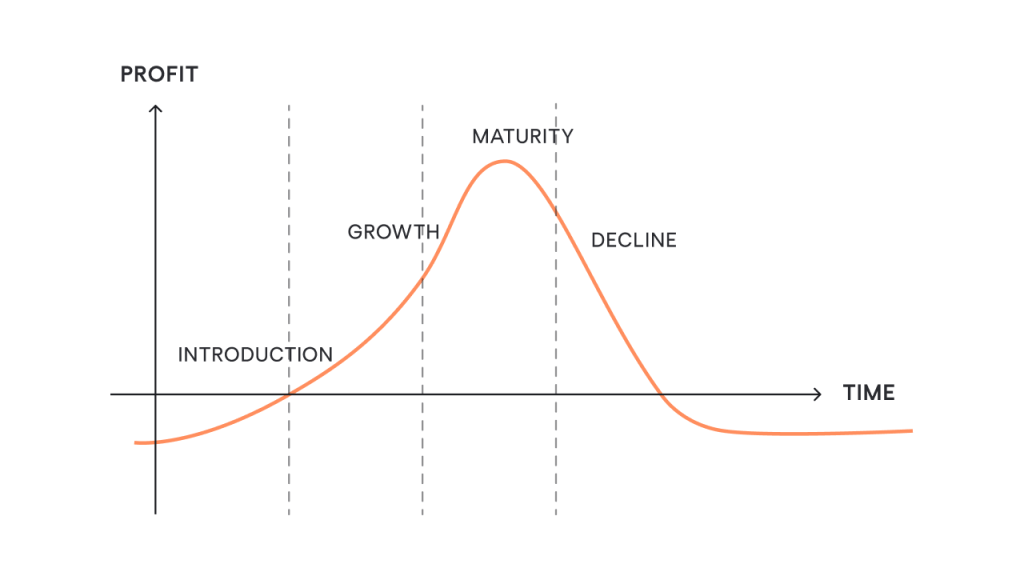
Here’s a short introduction to six key stages of the Product Life Cycle:
1. Development Stage
This is the pre-market phase, where the product is conceived and developed. Activities include:
- Research and Design: Teams work on prototypes, conduct tests, and evaluate product effectiveness.
- Planning the Launch: Strategies are created to introduce the product successfully to the market.
- Challenges: This phase can be time-consuming and costly, especially for innovative or complex products.
Objective: Build brand and product awareness in preparation for market entry.
2. Introduction Stage
The product is officially launched into the marketplace. At this stage:
- Awareness Building: Marketing focuses on educating target customers and creating interest in the product.
- Low Sales: Sales typically grow slowly as customers learn about the product.
- Promotion Tactics: Businesses often rely on content marketing, inbound strategies, and direct outreach to potential customers.
Objective: Establish a foothold in the market and begin generating demand.
3. Growth Stage
As the product gains acceptance, it enters the growth phase:
- Increased Sales: A steady rise in demand and profitability as consumers embrace the product.
- Expanding Market: New competitors may enter the market, signaling product success.
- Marketing Shift: The focus moves from awareness to building brand loyalty and market presence.
Objective: Maximize growth through new features, distribution channels, and strong customer support.
4. Maturity Stage
Sales begin to stabilize as the product reaches its peak potential.
- Market Saturation: Growth slows, and competition intensifies.
- Cost Efficiency: Companies streamline production and reduce costs.
- Marketing Strategy: Emphasis shifts to differentiation and retaining market share.
Objective: Establish the brand as a market leader and extract maximum profitability.
5. Saturation Stage
Sales plateau as the market becomes saturated with competitors.
- Market Dynamics: Growth halts, but there is no significant decline.
- Differentiation Focus: Efforts center on standing out through features, pricing, or superior customer service.
- Strategies: Minor product improvements or testimonials may be used to sustain interest.
Objective: Maintain relevance and defend market share as long as possible.
6. Decline Stage
Sales and profits decline as demand diminishes, often due to emerging trends or competing innovations.
- Strategic Decisions: Companies may discontinue the product, innovate to revitalize it, or reposition it in a niche market.
- Marketing Efforts: Focus on nostalgia, loyalty, or the product’s unique attributes.
- Extending the Life Cycle: This can involve new features, fresh markets, or alternative uses.
Objective: Either exit gracefully or reinvent the product to remain relevant.
The Product Life Cycle offers businesses a roadmap for navigating the challenges and opportunities associated with each stage. By adapting strategies to the unique demands of each phase, companies can optimize profitability, extend product longevity, and remain competitive in a constantly evolving market. Understanding and proactively managing the PLC ensures that products are not just introduced effectively but also sustained for as long as possible.
Feel free to reach out to www.dreieskiva.com to outline your Product Life Cycle to position your product in its target market and segments.
 DREIESKIVA|Roald Kvam
Legg igjen en kommentar